
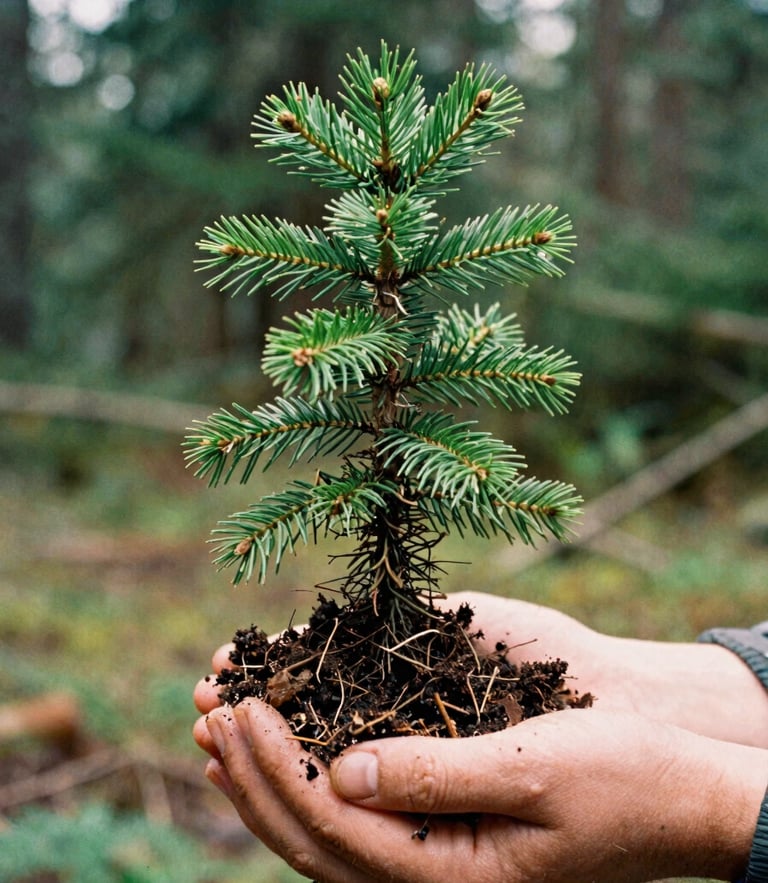
Candid close-up shot of a volunteer's hands holding a native Douglas fir sapling in dark, damp soil, soft overcast Pacific Northwest daylight, 35mm film style.
Our Roots

Stewardship on Washington soil

We translate regional climate advocacy into immediate, physical restoration projects. From native canopy planting to watershed recovery, we gather every Saturday to heal local ecosystems.

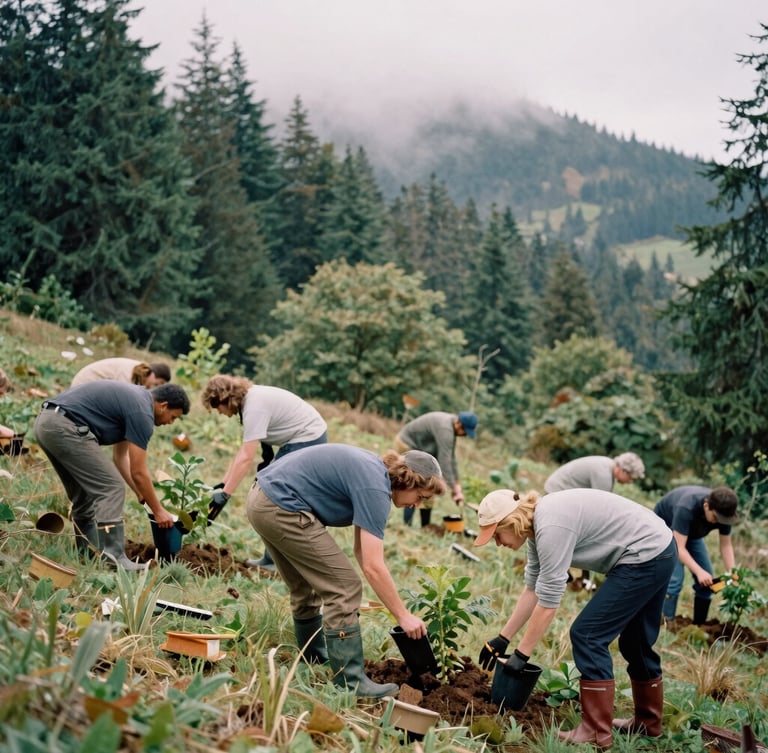
Candid action shot of volunteers of diverse ages planting trees on a misty Washington hillside, wearing rain boots, soft filtered forest light, 35mm film style.
Active Stewardship

From anxiety to action

We founded Standing for Nature to bridge the gap between abstract climate concern and physical ecological recovery. We believe conservation isn't a policy paper—it is a relationship built one trail, one native seed, and one muddy Saturday morning at a time.

By partnering with local educators, regional experts, and neighborhood volunteers, we embed practical science directly into community action. Together, we are restoring Washington's forests and urban green spaces.

Our Footprint

Measurable local restoration

12,400+

Douglas firs planted

45 acres

canopy restored

1,800+

active volunteers

Collaborative Growth

Rooted in community trust

We work alongside schools, tribal leaders, and regional conservation districts to ensure our restoration efforts are scientifically grounded and culturally respectful.

School Programs

Watershed Alliances

Urban Forestry

We bring classrooms out of the schoolhouse and onto the trail, teaching local ecology through hands-on planting.

Partnering with local river keepers to clear invasive weeds and stabilize fragile salmon-spawning banks.

Collaborating with municipal teams to expand native canopy cover in historically underserved neighborhoods.